
What is an evidence-graded buyer persona?
 Clwyd Probert: Sep 30, 2026, 8:25:00 PM
An evidence-graded buyer persona is a buyer persona in which every claim carries a label saying where it came from: first-party evidence (the...

Key Takeaway
The 2025 ChiefMartec martech landscape counts 15,384 solutions, yet most small and mid-sized marketing teams need just 3–5 well-chosen tools — not twelve. The winners in 2026 are platforms that consolidate content creation best AI copywriting tools best AI blog writer tools, workflow automation, and audience insight into a single stack. This guide compares the nine tools that matter, with real pricing, honest limitations, and a framework for choosing the right combination.
AI marketing tools are software platforms that use artificial intelligence to automate, optimize, or accelerate marketing tasks — from writing blog posts and designing social graphics to orchestrating multi-channel campaigns and analyzing buyer behavior. In 2026, they are no longer experimental add-ons.
For UK businesses specifically, adoption has hit an inflection point. Research from the British Chambers of Commerce and the University of Essex (March 2026) shows 54% of UK firms now actively use AI — up from 35% just one year earlier. Yet 95% of those firms report no impact on headcount. AI is augmenting teams, not replacing them.
The question is no longer whether to adopt AI marketing tools, but which ones — and how to avoid the tool sprawl that eats time in context-switching and manual data transfers.
15,384
MarTech Solutions
100× growth since 2011
54%
UK Firms Using AI
Up from 35% in 2025
13 hrs
Saved Per Week
Average with AI tools
~$5K
Monthly Savings
Operational costs, as reported
Sources: ChiefMartec Marketing Technology Landscape 2025, British Chambers of Commerce / ISER Essex March 2026, ActiveCampaign / Talker Research survey of US marketers (2025)

We assessed each tool across six criteria that matter most to small and mid-sized marketing teams — the same criteria used by G2, Capterra, and TrustRadius reviewers, weighted for real-world marketing operations:
Content Quality & Brand Voice
Can the tool produce content that sounds like your brand, not generic AI output?
Automation Depth
Does it automate end-to-end workflows — research, creation, optimization, publishing — or just generate first drafts?
Integration & Stack Fit
HubSpot, Salesforce, WordPress, Slack — does it connect to the tools your team already uses without Zapier workarounds?
Pricing Transparency
Clear per-seat pricing, or hidden credit systems that make costs unpredictable?
Data Privacy Compliance
Does the vendor offer a data processing agreement, say where your data is stored, and support the privacy laws that cover your contacts, such as GDPR in the UK and EU and state privacy laws in the US?
Audience & Persona Intelligence
Can it go beyond content generation to help you understand who you are writing for — through personas, segmentation, or buyer insight?
Here is how the nine most relevant AI marketing tools compare across pricing, core strengths, and ideal use case. We have focused on tools that marketing teams of 5–50 people actually use — not enterprise-only platforms with six-figure minimums.
| Tool | Starting Price | Best For | Key Strength | Key Limitation |
|---|---|---|---|---|
| Jasper AI | $69/seat/mo | Brand-consistent content in volume | Jasper IQ brand voice engine | No image generation; output needs editing |
| Copy.ai | $29/mo (Chat) | GTM workflow automation | No-code workflow builder; 2,000+ integrations | Credit consumption unpredictable; Growth is $1,000/mo (billed yearly) |
| HubSpot Breeze | $20/seat/mo | CRM-native AI for HubSpot users | Native CRM context; no external data sync | Credit costs escalate; limited outside HubSpot ecosystem |
| SurferSEO | From $49/mo (yearly) | SEO-first content optimization | Real-time SERP analysis; competitor benchmarking | Not a content creator; no visuals |
| Writer.com | Contact sales | Enterprise governance & multi-team AI | Custom agents; role-based access; audit trails | Opaque pricing; steep learning curve |
| ChatGPT Plus | $20/mo | General-purpose AI for any task | Versatile; low cost; excellent for brainstorming | No brand voice memory; no workflow automation |
| Semrush Content Toolkit | $60/mo | SEO content from keyword data | Keyword-to-content pipeline; competitive data | Limited to writing; Semrush SEO Toolkit Pro is a further $139.95/mo |
| Canva Magic Studio | $144/yr (Pro) | AI-powered design without designers | Accessible; vast template library; Magic Write | Design-focused; no marketing automation |
| Synthesia | $29/mo | AI video without cameras or actors | Script-to-video in minutes; 140+ AI avatars | Uncanny valley; limited to talking-head format |
Sources: vendor US pricing pages, checked Oct 7, 2026. Prices in US dollars, billed monthly unless marked yearly; HubSpot's is the list price of a Starter Customer Platform seat.

Content creation is the most mature AI marketing category. But "content creation" now spans far more than blog posts — it includes email sequences, social copy, ad variations, video scripts, and design assets. The tools that dominate this space take different approaches.
Jasper AI leads for teams that need brand-consistent content across channels. Its Jasper IQ engine learns your brand voice from examples and style guides, then applies it across every piece of content. The January 2026 Optimization Agent adds real search intelligence into the workflow. At $69 per seat a month (Pro; $59 billed yearly), it is premium but justified for teams publishing 20+ pieces per month across multiple channels.
Semrush's Content Toolkit (formerly ContentShake AI) takes a data-first approach — it generates content directly from keyword research data, so every article starts with search intent. At $60 a month, it is excellent value for SEO-focused teams, though it cannot match Jasper on brand voice sophistication.
ChatGPT Plus at $20 a month remains the budget workhorse. It handles brainstorming, first drafts, and research brilliantly, but lacks persistent brand memory and marketing-specific workflows. Every session starts from zero context.
In an NP Digital study of 744 articles across 68 websites, human-written posts had 5.44× more traffic than AI-generated posts by month five. The best AI content tools are those that accelerate your team, not replace them.
Want to see how an AI marketing agent goes beyond content creation to run entire campaigns?
Read the AI Marketing Agent GuideAutomation is where AI marketing tools diverge most sharply. Some tools automate a single step (write a blog post), while others orchestrate entire workflows from research through to publication and performance tracking.
Copy.ai leads pure automation with its no-code workflow builder linking 2,000+ tools. It can automatically enrich leads, generate personalized outreach, create case studies from customer data, and populate your CRM — all without human intervention. But the Growth plan is $1,000 a month (billed yearly) for 75 seats and 20,000 workflow credits, and credit consumption varies wildly by task type.
HubSpot Breeze offers automation deeply embedded in CRM context. Its Prospecting Agent researches and personalizes outreach using your actual customer data, while Blog Writer creates content informed by your analytics. The advantage is zero data synchronization — everything lives in one system. The trade-off: meaningful automation requires Marketing Hub Professional (from $800 a month, billed yearly, with three core seats and 3,000 HubSpot Credits a month), and extra credits cost $0.010 each.

Pricing in AI marketing tools has become deliberately complex. Many vendors now use hybrid pricing models combining seat licenses with usage-based credits, making true cost of ownership hard to predict before you commit. Here is what a realistic 5-person marketing team actually pays:
| Stack Approach | Tools Included | Monthly Cost | Trade-Off |
|---|---|---|---|
| Budget Starter | ChatGPT Plus + Canva Pro + HubSpot Free | About $160 | Capable but manual; no workflow automation or brand voice memory |
| Mid-Market | HubSpot Pro + Jasper Pro + SurferSEO | From about $990, plus Jasper Business (custom) | Strong but disconnected; three platforms to manage |
| Enterprise | Salesforce + Writer.com + Copy.ai Scale | Custom quotes (Copy.ai Scale alone is $3,000) | Powerful but complex; requires dedicated ops team |
Our arithmetic from vendor US list prices checked Oct 7, 2026, for a five-person team. Budget: five ChatGPT Plus seats ($20 each) and five Canva Pro seats ($144 a year each), with HubSpot Free. Mid-market: HubSpot Marketing Hub Professional ($800, three seats, plus two extra seats at $45) and Surfer Standard ($99, billed yearly); Jasper needs its custom-priced Business plan for more than one seat.
The Hidden Cost Trap
Watch for credit-based pricing. HubSpot's Breeze Customer Agent uses 50 HubSpot Credits per resolved conversation (about $0.50 at the $0.010 pay-as-you-go credit rate). Copy.ai's workflow credits vary by task type. Heavy workflow use can add a sizable monthly credit bill on top of seat licenses.
Ask vendors for a total-cost calculator before signing annual contracts. Model your actual usage, not their demo scenario.

Data privacy compliance is no longer a nice-to-have checkbox — it is a procurement blocker.
If you handle personal data about people in the UK or EU, prioritize tools that offer explicit GDPR compliance commitments, standardized Data Processing Agreements, and ideally EU/UK data residency options. HubSpot, Salesforce, and Adobe all maintain strong compliance programs. Emerging platforms vary — always request DPA documentation before trial.
The practical GDPR roadmap: confirm the vendor's GDPR commitments, sign its data processing agreement, document legitimate interests assessments for AI processing activities, and run a formal DPIA (Data Protection Impact Assessment) where processing is likely to result in a high risk to people.
If you have US contacts, there is no single federal privacy law, but state laws apply. California's CCPA, as amended by the CPRA, gives consumers the right to know, delete and correct the personal information a business holds about them, to opt out of its sale or sharing, and to limit the use of sensitive personal information; it also requires a contract with the service providers you disclose that information to. Virginia and Colorado are among the other states with their own comprehensive privacy laws. Ask vendors whether their contracts include those service-provider terms.
The EU AI Act adds its own duties. Its transparency rules have applied since August 2, 2026, and after the EU's AI Omnibus amendment, rules for high-risk uses such as recruitment and credit scoring apply from December 2, 2027. This is general information, not legal advice: check how these rules apply to you with your own legal adviser.
Published ROI figures for AI marketing tools vary widely, and most are self-reported.
Treat them with care: the most capable teams implement AI most successfully and report the biggest gains. Time savings are easier to pin down: marketers using AI say they save an average of 13 hours per week and nearly $5,000 a month in operational costs (ActiveCampaign / Talker Research survey of US marketers, 2025).
The critical insight from research is that AI creates efficiency or adds complexity, depending entirely on implementation quality. Teams that deploy AI strategically — as augmentation within clear workflows — see the gains. Teams that treat AI tools as point solutions often find integration overhead and tool sprawl offset the gains entirely.
The Bottom Line on ROI
The tools with the highest ROI are not the most feature-rich — they are the ones that replace the most manual steps in your existing workflow. For example, a $60-a-month tool that removes 8 hours of weekly content production delivers better ROI than a $1,500-a-month platform you use for first drafts only. Map your workflow first, then choose tools that automate the biggest bottlenecks.
Choosing between 15,384 marketing tools sounds overwhelming, but the decision simplifies when you start from your workflow rather than feature lists. Here is the framework we recommend:
If content quality is your bottleneck — and your team publishes 10+ pieces per month but struggles with brand consistency — start with Jasper AI ($69 per seat a month). It solves the specific problem of producing on-brand content at volume.
If integration chaos is your bottleneck — and your team wastes hours switching between tools, reconciling data, and fighting broken automations — look at HubSpot Breeze if you already run HubSpot, and before adding any tool, check how it connects to what you have. If you want to understand the full cost of tool sprawl, read our guide on how to build a MarTech stack that actually works.
If lead generation is your bottleneck — and your sales team needs more qualified conversations, not more blog posts — Copy.ai automates GTM workflows from prospecting through personalized outreach.
If you are just getting started with AI — ChatGPT Plus ($20 a month) plus Canva Pro ($144 a year) gives you a capable foundation for about $32 a month. Scale up as you identify specific bottlenecks.
Mistake: Buying Features, Not Workflows
Teams compare feature checklists instead of mapping their actual workflow and finding the tool that eliminates the most manual steps. A tool with 50 features you never use costs more than a focused tool that solves your top 3 bottlenecks.
Mistake: Ignoring the Stack Effect
Adding a sixth, seventh, or eighth tool to your stack does not make your team faster — it makes them slower. Every new tool adds context-switching cost, login overhead, and integration maintenance. Consolidation beats accumulation.
Q: What is the best free AI marketing tool?
ChatGPT's free tier combined with Canva's free plan gives you content generation and design capabilities at zero cost. HubSpot's free CRM adds basic marketing automation. This combination handles research, writing, design, and email for teams just starting with AI — though you will lose brand voice consistency and workflow automation available in paid tools.
Q: Can AI marketing tools replace a marketing agency?
AI tools can replace much of the production work agencies handle — content creation, design, basic analytics — at a fraction of the cost. However, AI cannot replace strategic thinking, creative direction, or industry relationships. The sweet spot is using AI tools for production and keeping human expertise for strategy.
Q: Are AI marketing tools GDPR compliant?
Major platforms like HubSpot, Salesforce, and Jasper maintain GDPR compliance programs with Data Processing Agreements. Smaller tools vary — always request DPA documentation before processing any customer data. The EU AI Act adds transparency duties for AI-generated content (since August 2, 2026) and rules for high-risk uses (from December 2, 2027), which makes vendor due diligence more important. If you have US contacts, check state privacy laws such as California's CCPA as well.
Q: How many AI marketing tools does a team actually need?
Most small and mid-sized marketing teams of 5–20 people are well served by 3–5 tools: one core platform (CRM + automation), one content creation tool, one design tool, and optionally a specialist tool for SEO or video. Adding more creates diminishing returns and increasing coordination costs. The trend in 2026 is toward consolidation: teams are tired of managing disconnected stacks.
Q: Is AI-generated content as good as human-written content?
Not on its own. An NP Digital study of 744 articles across 68 websites found human-written content had 5.44× more traffic than AI-generated content by month five. The winning approach is hybrid: use AI for first drafts and structural frameworks, then apply human expertise for brand voice, original insight, and strategic depth. This is why tools with strong brand voice engines (like Jasper's IQ) deliver better results than generic generators.
Do not start with tools. Start with your workflow. Map the steps your team takes from campaign brief to published content. Identify where you lose the most time — that is where AI delivers the highest ROI.
For most small teams, the pragmatic path looks like this: begin with ChatGPT Plus and Canva Pro (about $32 a month) for immediate productivity gains. Once you identify a specific bottleneck — brand voice at scale, SEO optimization, lead generation workflows — add one specialist tool. Resist the temptation to add a fourth, fifth, or sixth platform. The teams getting the best results from AI in 2026 are not using the most tools — they are using fewer, better-integrated tools.
See what Mary finds on your website.
Join the early-adopter list and be one of the first to try Mary on your own website.
Plans from Free to Enterprise · pricing to be confirmed
Sources: ChiefMartec Marketing Technology Landscape 2025, British Chambers of Commerce / ISER Essex University March 2026, ICO UK GDPR Guidance, ActiveCampaign / Talker Research (2025)
Clwyd Probert
Founder, Marketing Mary
Clwyd Probert is the founder of Marketing Mary, an evidence-first persona intelligence platform for B2B marketing, and CEO of Whitehat, a London-based SEO and inbound marketing agency and HubSpot Diamond Solutions Partner.
Where Marketing Mary fits
We make Marketing Mary, so it isn't in the rankings. It reads a company's website, builds evidence-graded buyer personas, and writes articles that a named person approves before they're published to HubSpot. After publishing, it adds internal links between your articles and checks the live page. Data is hosted in the UK (London). Pricing is to be confirmed.
See how Marketing Mary works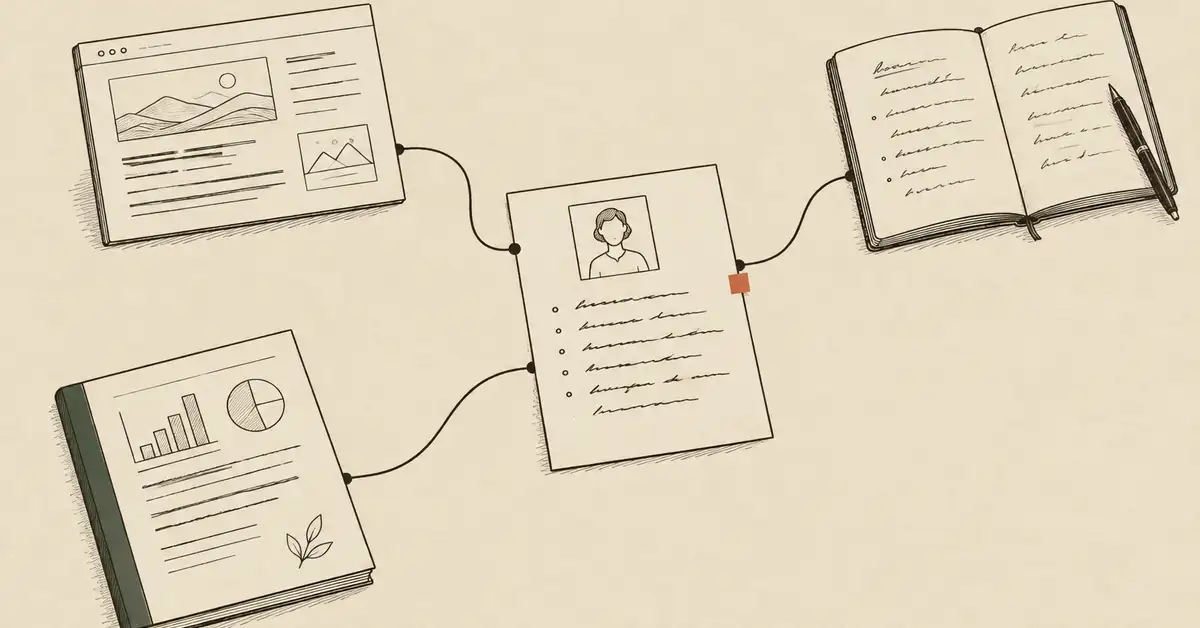 Clwyd Probert: Sep 30, 2026, 8:25:00 PM
An evidence-graded buyer persona is a buyer persona in which every claim carries a label saying where it came from: first-party evidence (the...
 Clwyd Probert: Sep 9, 2026, 11:58:11 PM
Our own Search Console tells this story: impressions up 53% and clicks down 6% in the 28 days to September 6, 2026, compared with the 28 days before,...
 Clwyd Probert: Aug 25, 2026, 10:16:09 AM
You can find HubSpot's credit rates. You can find your monthly allowance. What you cannot easily find is the sentence that connects them — so most...
 Clwyd Probert : Mar 27, 2026, 10:00:00 AM
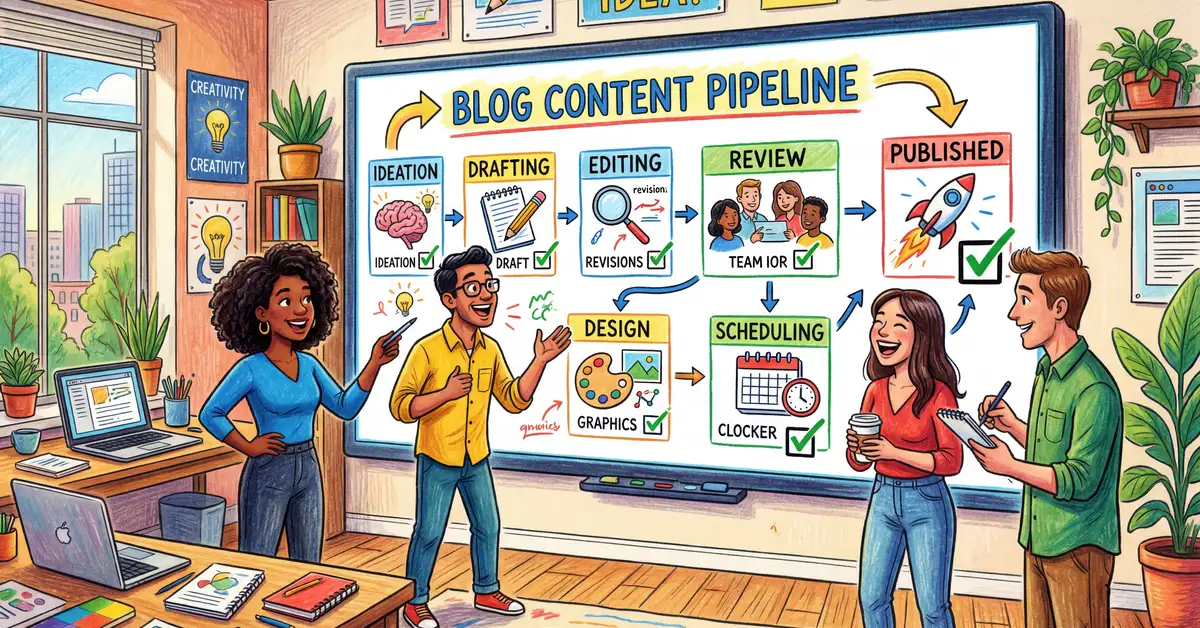
Compare AI blog writer tools across all 9 publishing steps — from research to live verification. See which tools stop at drafts and which go further.
 Clwyd Probert : Mar 28, 2026, 8:00:00 AM
We tested six AI copywriting tools on real campaign briefs: brand voice, pricing and where each one falls short. Comparison table included.
 Clwyd Probert : May 5, 2026, 10:00:00 AM
We compared AI buyer persona tools for 2026, including HubSpot, Delve AI and UXPressia, on research depth, integration, B2B fit and price.